Learning Path for Automated Trading: From Beginner to Advanced
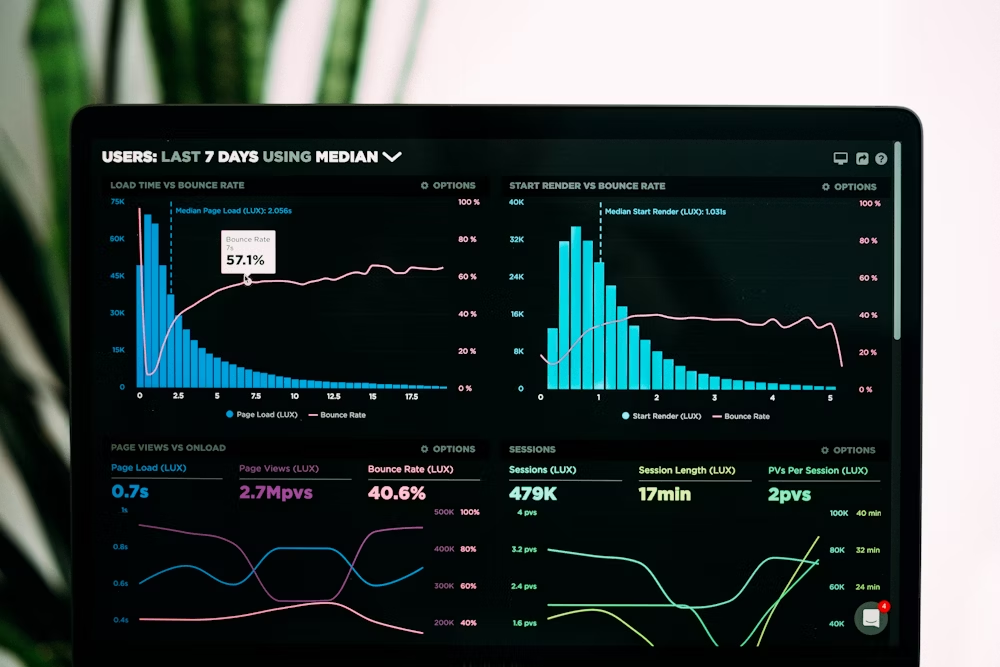
Recommended Educational Approach for Automated Trading
For those interested in learning automated trading systems, we recommend this structured educational path that builds knowledge progressively from fundamental concepts to advanced implementation. Follow this roadmap to develop the skills needed for successful algorithmic trading.
🚀 Your Automated Trading Learning Journey
A progressive 3-stage approach to mastering algorithmic trading
Beginner Level: Building Foundations
Start with understanding basic market concepts and introductory programming. Focus on learning how financial markets operate before diving into automation.
🎯 Key Learning Objectives:
Market Fundamentals
Understanding how financial markets work, different asset classes, and basic market mechanics
Basic Programming
Variables, data types, conditional logic in Python or similar languages
Technical Analysis
Learning basic chart patterns, indicators, and market analysis techniques
Risk Management Basics
Understanding position sizing, stop losses, and basic risk concepts
📚 Recommended Resources:
- Python for Everybody course
- Market Wizards book series
- Babypips School of Pipsology
Intermediate Level: Strategy Development
Move on to understanding algorithmic concepts and practicing with simulated trading environments. Bridge theory with practical application.
🎯 Key Learning Objectives:
Algorithm Design
Learning how to translate trading ideas into systematic rules and logic
Backtesting Methodology
Understanding how to test strategies historically and interpret results properly
Risk Management
Implementing proper position sizing and drawdown control mechanisms
Platform Familiarity
Gaining proficiency with trading platforms and programming environments
📚 Recommended Resources:
- Python for Finance tutorials
- Backtesting with backtrader library
- MT4/MT5 demo platform practice
Advanced Level: Professional Implementation
Explore complex strategies, optimization techniques, and advanced risk management approaches. Prepare for professional-level implementation.
🎯 Key Learning Objectives:
Advanced Algorithms
Implementing machine learning, statistical arbitrage, and sophisticated approaches
Portfolio Optimization
Managing multiple strategies and understanding correlation effects
Regulatory Considerations
Understanding compliance requirements for automated trading systems
Infrastructure & Technology
Learning about execution systems, data management, and technology stack
📚 Recommended Resources:
- Advanced Python for Quantitative Finance
- Machine Learning for Trading courses
- Professional trading infrastructure guides
❓ Frequently Asked Educational Questions
What programming languages are most useful for learning automated trading?
Python is widely recommended for educational purposes due to its readability, extensive libraries for data analysis, and strong community support. MQL4/MQL5 are also valuable for those specifically interested in MetaTrader platforms.
Can I practice automated trading without financial risk?
Yes, absolutely! Most trading platforms offer demo accounts with virtual money where you can test automated strategies in real market conditions without financial risk. This is an excellent way to learn and validate your understanding before committing real capital.
How much time does it typically take to learn automated trading concepts?
The learning curve varies based on your background. Those with programming experience may grasp the technical aspects more quickly (3-6 months), while those new to both markets and programming should allow 6-12 months of dedicated study to develop a solid foundation.
What are the most common mistakes when learning about automated systems?
Common educational mistakes include:
- Over-optimizing strategies based on historical data (curve-fitting)
- Underestimating risk management importance
- Not accounting for transaction costs and slippage in simulations
- Jumping to complex strategies before mastering basics
Pro Learning Strategy
The most successful automated traders combine continuous learning with practical application. Start with simple strategies, test thoroughly in demo environments, and gradually increase complexity as your understanding deepens. Remember: consistency beats complexity in the long run.